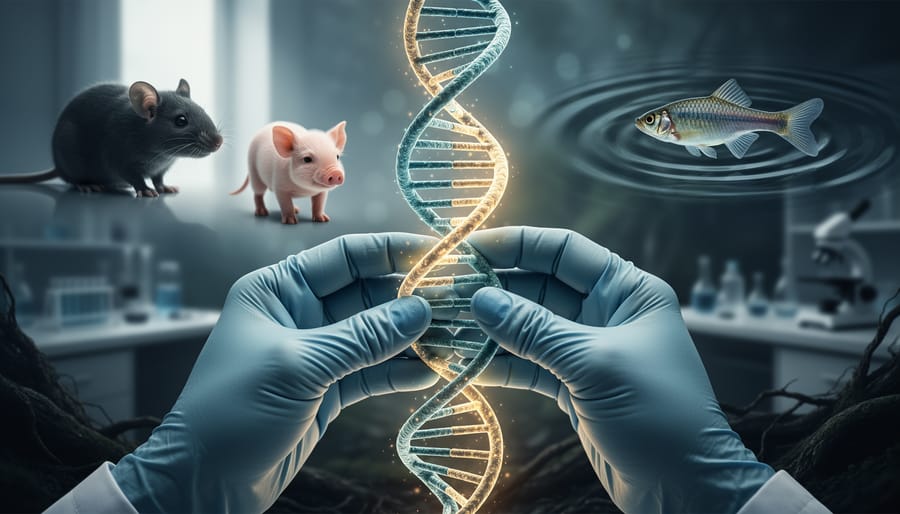
Human genetics is the study of how traits, diseases, and biological characteristics pass from one generation to the next through DNA, the molecular instruction manual shared by all living things. If you searched for “j human genetics,” you might have been looking for the Journal of Human Genetics, a peer-reviewed academic publication, or simply exploring human genetics as a field. Either way, this article will walk you through what human genetics reveals about our species and, more surprisingly, what it tells us about our evolutionary connections to the rest of the animal kingdom.
Why does this matter? Because human genetics doesn’t exist in isolation. Every gene in your body has a story that stretches back millions of years, connecting you not just to distant human ancestors but to mice, fruit flies, zebrafish, and even creatures you’d never expect. Understanding these connections transforms genetics from an abstract laboratory concept into something deeply personal and wonderfully strange.
The field has moved far beyond simply mapping genes. Researchers now compare genetic sequences across species to pinpoint which stretches of DNA control fundamental processes like cell division, immune response, and embryonic development. These comparisons reveal that many of the genetic tools your body uses to build a heart, fight infection, or repair damaged tissue are modified versions of tools found in animals separated from us by hundreds of millions of years of evolution.
This article unpacks how human genetics works at the molecular level, explores the different types of genetic research that illuminate our place in the tree of life, and examines real-world applications where understanding animal genetics has led to breakthroughs in human medicine. You’ll discover why studying the genes of a mouse or a pig can unlock treatments for human disease, and how the same genetic language written into your DNA also runs through creatures you encounter every day.
What Human Genetics Actually Means
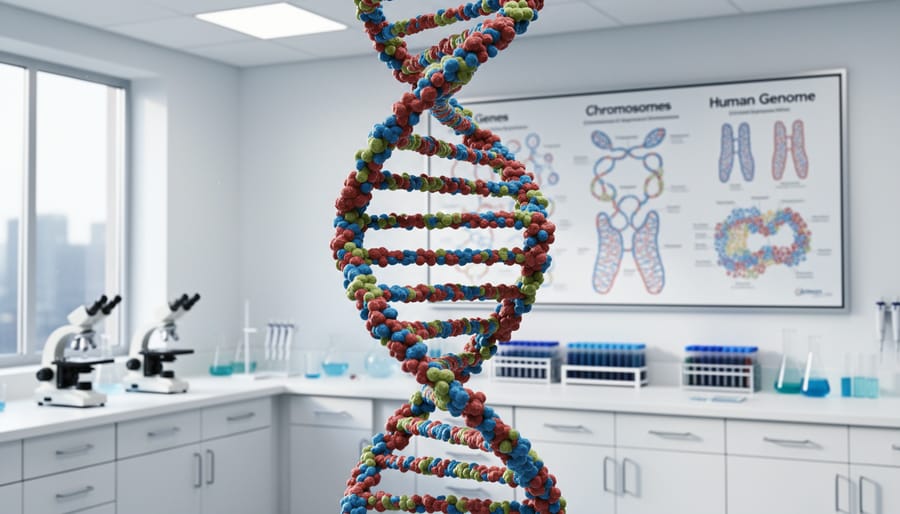
Human genetics is the scientific study of how traits and characteristics pass from one generation to the next in our species, and why we differ from one another despite sharing the same basic blueprint. At its core, this field examines the molecular instruction manual that makes you uniquely you while simultaneously connecting you to every other human, and, surprisingly, to virtually every living thing on Earth.
Think of your body as an incredibly complex machine built from about 37 trillion cells. Nearly every one of those cells contains a complete copy of your genome, the full set of instructions needed to build and maintain a human being. These instructions are written in a chemical language using DNA (deoxyribonucleic acid), a molecule shaped like a twisted ladder that stores information in sequences of four chemical building blocks. The human genetics definition encompasses both the structure of this hereditary material and the mechanisms by which it varies between individuals.
Understanding a few key terms helps clarify how this system works:
- DNA
- The chemical molecule that stores genetic information in a double-helix structure, using sequences of four bases (A, T, G, C) to encode instructions for building proteins and regulating cellular functions.
- Genes
- Specific segments of DNA that contain instructions for making proteins or performing regulatory functions. Humans have roughly 20,000-25,000 genes, though they make up only about 2% of total DNA.
- Chromosomes
- Tightly coiled packages of DNA and proteins. Humans typically have 46 chromosomes (23 pairs) in each cell, with one set inherited from each parent.
- Genome
- The complete set of genetic material in an organism. The human genome contains about 3 billion base pairs of DNA sequence.
- Alleles
- Different versions of the same gene. For example, the gene for eye colour has several alleles that produce different shades of brown, blue, or green.
What makes human genetics fascinating beyond our own species is that the basic language of DNA isn’t exclusive to humans. The same four-letter chemical alphabet, the same gene structure, and many of the same fundamental instructions appear across the animal kingdom. A gene that regulates cell division in your body might use remarkably similar sequences to one performing the same job in a mouse, a fish, or even a fruit fly. This isn’t coincidence, it’s evidence of shared ancestry stretching back hundreds of millions of years.
Human genetics research reveals both what makes us distinctly human and what binds us to the broader tree of life. The field examines everything from why you inherited your mother’s dimples to why certain medications work differently in different people, all while uncovering the evolutionary story written in our DNA.
How Genetic Inheritance Works Across Species
Genetic inheritance across species works through a surprisingly simple principle: if a genetic instruction is essential for life, evolution tends to preserve it. When DNA sequences control fundamental processes like cell division, energy production, or protein construction, they become what scientists call evolutionary conservation genetic blueprints so critical that natural selection maintains them across vast timescales and divergent lineages.
Think of DNA as an instruction manual written in a four-letter alphabet (A, T, G, C). Every living organism on Earth uses this same code, inherited from a common ancestor billions of years ago. While individual species have edited, reorganized, and expanded their manuals over time, certain chapters remain remarkably consistent. The genes controlling how cells read DNA to make proteins, for instance, work nearly identically in yeast, mice, and humans because this machinery is non-negotiable for survival.
When two species share a common ancestor, they inherit copies of that ancestor’s genes. As each lineage evolves separately, mutations accumulate in DNA sequences. But here’s the crucial insight: mutations in genes controlling vital functions often prove fatal and disappear from the population, while mutations in less essential regions can persist. This creates a gradient of similarity, genes for basic cellular housekeeping remain highly conserved, while genes for species-specific traits like fur color or vocal cords diverge rapidly.
The timeframe matters. Humans and chimpanzees split from a common ancestor roughly six million years ago, so their genomes remain quite similar. Humans and mice diverged about ninety million years ago, yet both still rely on strikingly parallel genetic systems for fundamental processes like embryonic development, immune response, and metabolic regulation. Even organisms that look radically different often share core genetic toolkits because those tools evolved once and proved so effective that nature kept using them. This shared heritage explains why studying other species illuminates human genetics, we’re reading variations of the same ancient manuscript.
The Spectrum of Human-Animal Genetic Similarity
Our Primate Family Tree
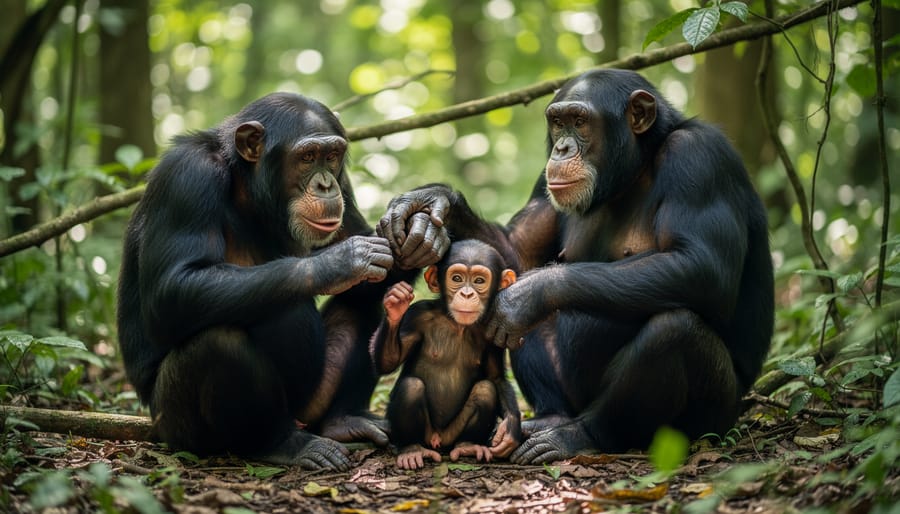
Chimpanzees and bonobos stand as our closest animal relatives, sharing a common ancestor that lived roughly six to seven million years ago. This evolutionary proximity manifests in striking genetic overlap, with modern hominid evolution analysis revealing extensive shared sequences between human and great ape genomes. What makes this similarity meaningful goes beyond raw percentages. It’s the specific genes that align, controlling everything from brain development to immune response, that show how recent our evolutionary split truly was.
Gorillas diverged from our lineage slightly earlier, around ten million years ago, while orangutans represent a more distant branch at roughly fifteen million years. Yet even with orangutans, fundamental genetic systems governing cell function, metabolism, and reproduction remain remarkably conserved. These aren’t arbitrary matches. They reflect shared solutions to biological challenges that worked well enough to persist across millions of years of separate evolution.
The differences matter as much as the similarities. Small genetic variations produce dramatically different outcomes: changes in genes controlling brain size, vocal anatomy, and skeletal structure created the distinct species we see today. Studying which genes diverged, and when, helps scientists trace how human-specific traits like complex language and prolonged childhood development emerged from our shared primate blueprint.
Beyond Primates: Mammals and Other Vertebrates
When we step beyond our primate cousins, the genetic connections don’t vanish, they shift into surprising patterns that reveal why a mouse or a pig can teach us about human disease.
Mice share a remarkable amount of genetic machinery with us, which explains why they’ve become the workhorses of medical research. The genes controlling basic cellular processes, organ development, and even many disease mechanisms operate similarly enough that discoveries in mouse models regularly translate to human treatments. When researchers develop a new cancer drug or test gene therapy approaches, mice provide a living laboratory precisely because their fundamental biology mirrors ours in critical ways.
Pigs occupy an especially intriguing position. Their organ sizes, physiology, and certain genetic systems align closely enough with humans that researchers have spent years exploring them as potential organ donors. While the challenge of immune rejection remains formidable, the genetic foundation for such research exists because pigs and humans share core developmental and metabolic pathways.
Dogs, bred into hundreds of distinct forms, offer unexpected insights into human genetics. The genetic variations producing different breeds also illuminate how mutations cause inherited diseases, many of which appear in both species. A collie’s eye disorder or a retriever’s hip dysplasia can mirror human conditions at the genetic level.
Even fish and birds retain fundamental genetic systems from our shared vertebrate ancestor hundreds of millions of years ago. The genes orchestrating early embryonic development or building a beating heart follow surprisingly similar blueprints whether you’re constructing a zebrafish, a chicken, or a human. These deep evolutionary echoes mean that studying a transparent fish embryo can reveal principles that apply directly to human development.
How Scientists Use Human-Animal Genetic Connections
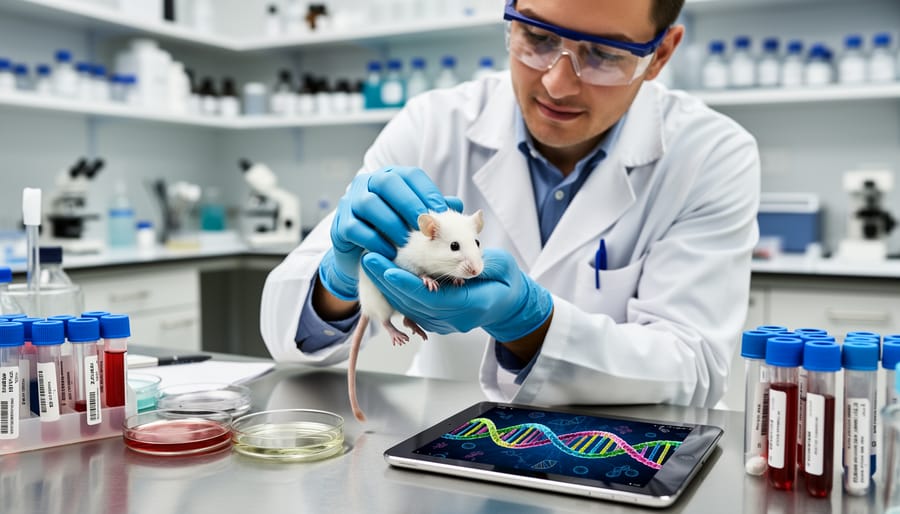
Scientists put the knowledge of shared genetics to work every day, turning what might seem like an abstract evolutionary curiosity into concrete tools for saving lives and understanding disease. The fact that humans and other species use similar genetic blueprints isn’t just intellectually fascinating, it creates practical pathways for medical breakthroughs that would be impossible to achieve through human studies alone.
The most direct application lies in disease modeling. When researchers want to understand how a genetic mutation causes illness, they often introduce that same mutation into mice or other model organisms. Because core biological processes, cell division, immune response, organ function, rely on conserved genetic pathways, the resulting disease often mirrors what happens in humans. This allows scientists to test potential treatments, study disease progression, and identify therapeutic targets without putting human patients at risk during early-stage research.
Different organisms serve distinct research purposes based on their genetic and biological strengths:
- Mice share fundamental mammalian physiology with humans, making them invaluable for studying cancer, neurological disorders, and immune system diseases
- Zebrafish embryos develop transparently outside the mother, allowing researchers to watch genes at work during organ formation and test developmental biology hypotheses in real time
- Fruit flies reproduce quickly and have well-mapped genetic systems, enabling scientists to trace inheritance patterns and identify gene functions across generations in weeks rather than years
- Pigs possess organ sizes and immune systems similar to ours, positioning them as candidates for xenotransplantation research exploring the possibility of animal-to-human organ donation
Drug development leans heavily on these genetic parallels. A medication that successfully targets a specific protein in mice often works similarly in humans because the genes encoding those proteins are nearly identical. Researchers screen thousands of chemical compounds in model organisms, narrowing candidates to those showing promise before moving to human clinical trials. This staged approach, built on genetic similarity, accelerates discovery while minimizing unnecessary risk.
Comparative genetics also drives evolutionary medicine, helping scientists understand why certain diseases persist in human populations. By examining how other species handle similar genetic challenges, why elephants rarely get cancer despite their size, for instance, researchers uncover protective mechanisms that might inspire new therapeutic strategies. The connections work both ways: understanding human genetics illuminates animal biology, while studying animals reveals hidden aspects of our own genetic machinery.
Types of Genetic Research Revealing These Connections
Scientists employ several distinct research approaches to uncover the genetic threads connecting humans to other species. Each methodology offers a different lens through which to view our evolutionary relationships, and together they’ve transformed our understanding of what makes us human while revealing how much we share with the rest of the animal kingdom.
- Comparative genomics
- The systematic comparison of entire genomes across different species to identify similarities and differences in DNA sequences. This approach reveals which genes have remained consistent through millions of years of evolution and which have diverged to create species-specific traits.
- Phylogenetics
- The reconstruction of evolutionary relationships using genetic data to build family trees showing how species are related through common ancestors. By analyzing mutations accumulated over time, researchers can determine when different lineages split and trace the path of genetic inheritance.
- Synteny analysis
- The study of gene order and arrangement along chromosomes to identify blocks of DNA that remain organized similarly across species. Finding conserved gene neighborhoods helps scientists understand which genomic structures are fundamental to life itself.
- Orthologous genes
- Genes in different species that evolved from a common ancestral gene and typically retain the same function. Identifying these shared genes allows researchers to predict how human genes might work by studying their counterparts in laboratory animals.
Functional genomics takes these comparisons further by examining what genes actually do rather than just cataloging their sequences. When researchers discover that a mouse gene performs the same job as a human gene, they can use mice to test potential treatments or study disease mechanisms. This practical application has accelerated medical research far beyond what would be possible studying humans alone.
Evolutionary genetics adds the dimension of time, tracking how genetic changes accumulate and which mutations provide advantages. Some research might sound like science fiction examples but the reality is equally fascinating: scientists can now trace specific genetic adaptations that allowed our ancestors to develop larger brains or that enabled polar bears to thrive in Arctic conditions.
These methodologies don’t work in isolation. A typical study might combine comparative genomics to identify a promising gene, phylogenetics to understand its evolutionary history, and functional genomics to determine what it does. This multi-faceted approach has revealed that the genetic connections between species run deeper than anyone imagined decades ago.
What These Connections Mean for Medicine and Beyond
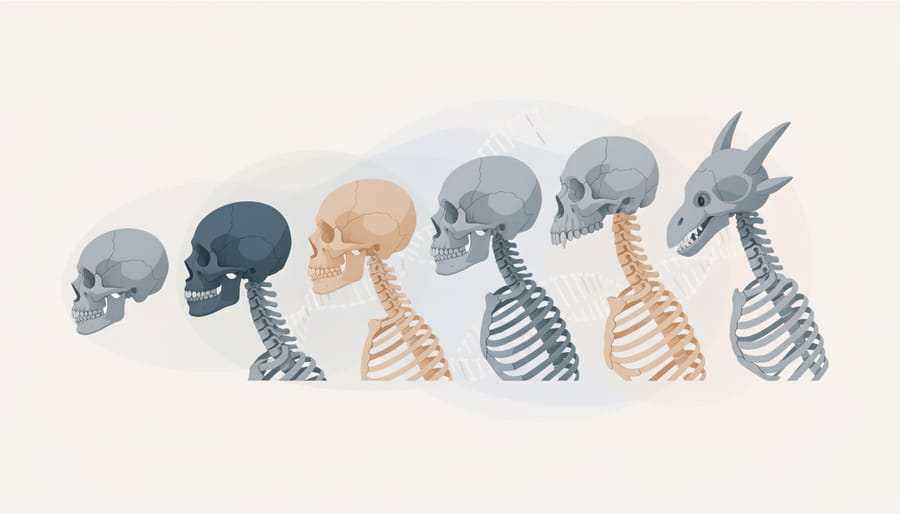
The genetic threads connecting humans to other species have reshaped modern medicine and forced us to reconsider fundamental questions about our place in nature. These discoveries don’t just advance laboratory research, they transform how we treat disease, conduct science, and think about what makes us human.
Medical research relies heavily on our genetic kinship with other mammals. Mice serve as stand-ins for human biology in countless studies because key genes and cellular processes work similarly in both species. When researchers develop a new cancer drug or test a vaccine, they often begin with mouse models precisely because shared genetic machinery means results translate reasonably well to human trials. Pigs have become valuable for cardiovascular research and potential organ transplantation work due to organ size similarities and compatible genetic systems, though significant immunological challenges remain unresolved.
The field of xenotransplantation, using animal organs for human patients, represents both the promise and complexity of these connections. Genetic engineering allows scientists to modify pig organs to reduce rejection risk, addressing the shortage of human donor organs. While experimental procedures have occurred, this technology faces substantial hurdles including immune response management and ethical scrutiny before becoming standard practice.
Understanding shared genetics also illuminates human evolution in ways fossils alone cannot. Comparing gene sequences across species reveals when lineages diverged, which traits evolved recently versus which persisted across millions of years, and how environmental pressures shaped different species from similar starting points. These insights place humanity within a continuous evolutionary story rather than apart from it.
Yet genetic similarity raises thorny questions. If we share extensive DNA with other primates, what justifies using them in research? At what threshold of genetic overlap should we reconsider an animal’s moral status? These aren’t purely scientific questions, they demand philosophical and ethical frameworks that science alone can’t provide.
The connections also challenge romantic notions of human uniqueness. We possess distinctive traits, complex language, abstract reasoning, cumulative culture, but they emerged through reshuffling and refining genetic tools shared across the animal kingdom, not wholesale invention. Our uniqueness lies in degree and combination rather than genetic isolation. This perspective is humbling and clarifying: we’re exceptional products of evolution, not separate from it.
Common Questions About Human-Animal Genetics
Readers often wrestle with what genetic similarity actually means in practice. These questions cut through common misconceptions and get at the heart of how we’re connected to other species.
Does genetic similarity mean we’re literally part banana or part mouse?
No. When scientists say humans share a certain percentage of DNA with bananas or other organisms, they’re referring to specific functional gene sequences that perform similar jobs across all life. These shared sequences control fundamental cellular processes like energy production or cell division, not the traits that make each species distinct. You’re fully human; you just happen to use some of the same molecular tools that evolved billions of years ago.
If we’re genetically close to chimpanzees, why do we look and act so different?
Small genetic differences can produce massive functional changes depending on where they occur. Gene regulation, timing of expression, and how genes interact matter enormously. A few percentage points of difference concentrated in developmental genes, brain structure genes, and regulatory sequences can create profound distinctions in appearance, cognition, and behavior while leaving fundamental cellular machinery nearly identical.
Can human genes actually function inside animals?
Yes, under the right conditions. Researchers routinely insert human genes into mice, fruit flies, and other model organisms to study gene function and test treatments. The genes often work because the underlying cellular machinery is conserved across species, though results vary depending on regulatory elements and the surrounding genetic environment.
Are there genes that only humans have?
A handful of genes appear unique to humans or have undergone significant human-specific changes, particularly genes involved in brain development, language capacity, and cognitive functions. However, truly novel genes are rare; most human uniqueness comes from modifications to existing genes and how they’re regulated rather than entirely new genetic material.
How do scientists know what percentage of DNA we share with other species?
Researchers compare full genome sequences, aligning DNA letter by letter across both genomes. They calculate similarity based on matching sequences, though the exact percentage varies depending on methodology (comparing all DNA versus only protein-coding genes, for instance). These comparisons require sophisticated computational tools and careful interpretation.
Can I see genetic similarities for myself somehow?
While you can’t directly observe DNA similarities without lab equipment, understanding heredity through home science experiments with traits in plants or simple organisms offers insight into how genetic principles work universally. Professional genome databases also make sequence comparisons publicly accessible, though interpreting them requires background knowledge.
The questions above reflect genuine curiosity about what connects us to other life forms. The answers matter because they shape how we understand ourselves, our responsibilities toward other species, and the evolutionary processes that produced the remarkable diversity we see today. Genetic similarity isn’t about blurring the lines between species but recognizing the shared foundation upon which life’s variety is built.
The next time you encounter the term “j human genetics,” whether in a journal title, a research abstract, or a casual conversation about heredity, you’ll understand it points toward something profound: the study of what makes us human, and paradoxically, what connects us to every other living thing. This field reveals we’re simultaneously unique in our cognitive abilities and culture, yet built from the same fundamental genetic toolkit as chimpanzees navigating forest canopies, mice scurrying through labs, and even organisms as distant as fruit flies whose cellular machinery echoes our own.
This dual reality, uniqueness within continuity, matters practically. Medical breakthroughs emerge because researchers can model human diseases in other species, testing treatments that eventually save lives. It matters philosophically too, reshaping how we see our place in nature. We’re not separate from the web of life but woven into it at the molecular level.
The research continues to accelerate. Comparative genomics projects are uncovering previously hidden connections, identifying which genes drive species-specific traits and which maintain life’s universal functions. These discoveries fuel both rigorous science and science-inspired stories that explore what it means to share biology across the evolutionary tree. As sequencing technology improves and more genomes are mapped, we’ll continue finding ourselves reflected in unexpected places, our genetic heritage a testament to billions of years of shared ancestry still unfolding.