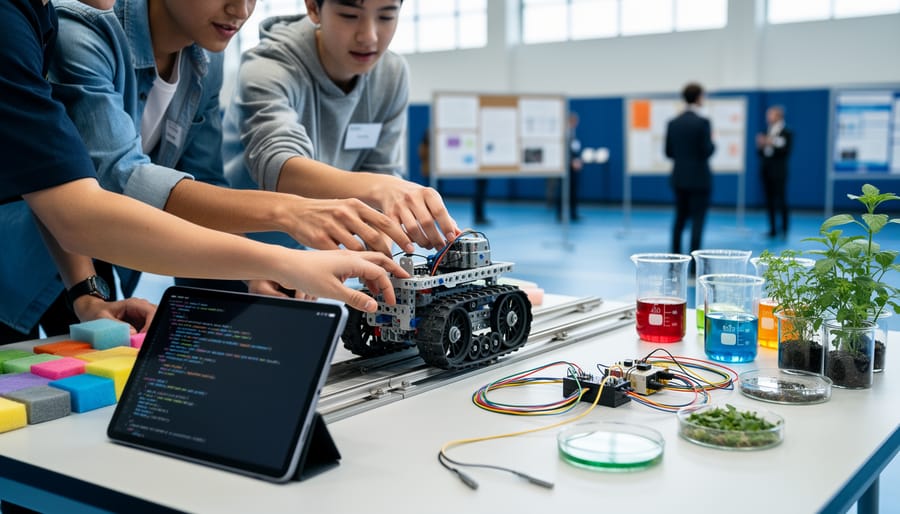
Science fair season is back, and whether you’re a fourth-grader tackling your first poster board or a high schooler aiming for the Canada-Wide Science Fair, you need a project that’s both achievable and genuinely compelling. At this year’s Vancouver District fair in March 2026, 130 students showcased everything from jaw-controlled wheelchair systems for paralyzed users to algorithmic bias studies tracking political ideology on Canadian social media. The best projects share a common thread: they solve real problems, test surprising hypotheses, or reveal hidden patterns in everyday phenomena.
The key is finding that sweet spot where your curiosity intersects with feasibility. Students in grades 4 through 6 can explore foundational concepts like which household materials best insulate heat or how salt concentration affects plant growth. Middle schoolers often tackle comparative studies or environmental surveys. High school competitors, eligible for regional events like the Bison Regional Science Fair in Winnipeg, frequently venture into engineering prototypes, microbiology cultures, or data-driven social research. One student at the Vancouver fair even investigated optimal surface preparation techniques for painting plastic models, proving that passion projects rooted in hobbies can yield rigorous scientific inquiry.
The path from kitchen-table experiment to provincial competition isn’t mysterious. It starts with asking a question that makes you lean forward in your chair, then designing a test that yields measurable, repeatable results.
What Makes a Science Fair Idea Stand Out
A standout science fair project balances four essential elements. First comes originality, the question you’re asking shouldn’t be a rehash of the classic volcano or plant-growth demonstration that’s been done thousands of times. The 2026 Vancouver District fair showcased this perfectly: one student built a low-cost wheelchair control system operated by jaw-muscle tension, while another investigated whether social media algorithms in Canada favor certain political ideologies. These weren’t textbook experiments; they were genuine inquiries into uncharted territory.
Feasibility matters just as much as ambition. You need a project you can actually complete with the time, resources, and equipment available to you. A proposal to sequence an entire genome sounds impressive, but if you’re working in a school lab with a three-week deadline, you’re setting yourself up for frustration. The best ideas push boundaries without requiring a university research budget.
Real-world relevance transforms a competent project into a compelling one. Judges and audiences respond to research that addresses actual problems or illuminates phenomena people encounter daily. Even something as niche as testing surface preparation techniques for painting plastic models, another 2026 Vancouver entry, connects hobby craftsmanship to material science principles that matter in industrial applications.
Above all, choose a topic that ignites your own curiosity. Formulaic demonstrations where you already know the outcome before you start rarely lead to meaningful discovery or engaging presentations. The questions that keep you wondering, the problems you actually want to solve, those are your strongest starting points.
1. Assistive Technology for Mobility and Independence
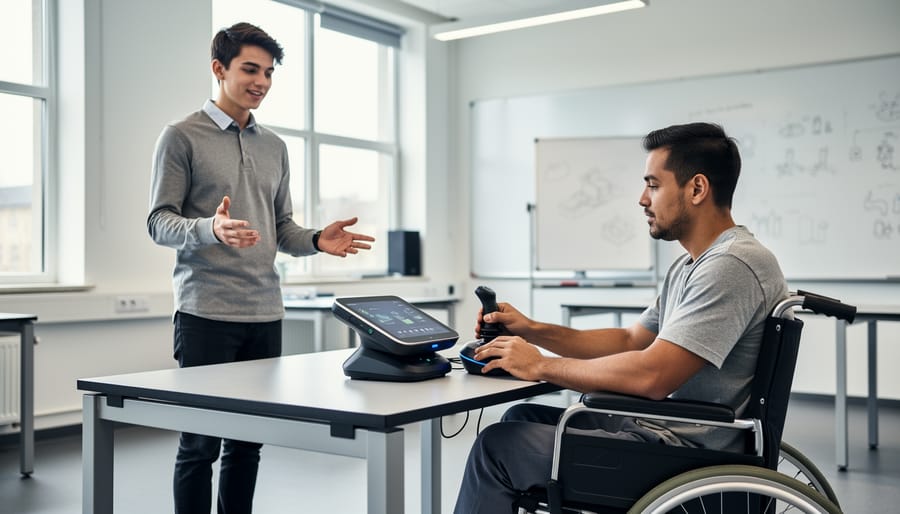
At the 2026 Vancouver District science fair, a student unveiled a wheelchair control system operated by tensing jaw muscles, a breakthrough for individuals with neck-down paralysis who cannot use traditional hand controls. The project demonstrated how affordable sensors and basic programming can translate muscle signals into directional commands, offering independence where commercial adaptive equipment often costs thousands of dollars. This kind of work sits at the crossroads of biomedical engineering and social justice, turning theoretical mechanics into devices that restore autonomy.
Assistive technology projects appeal because they address tangible human needs. A student might design a simplified communication board that uses pressure sensors for people with limited speech, or build a prototype reaching aid that extends mobility in home environments. The engineering is accessible, Arduino boards, simple motors, 3D-printed components, but the impact resonates beyond the display table. You’re not just demonstrating circuit logic; you’re asking how technology can level opportunity gaps.
The strongest entries in this category test their prototypes with real users or consult occupational therapists to understand constraints. They measure response time, durability under repeated use, and cost against existing solutions. They also grapple with ethical dimensions: Who gets excluded when assistive devices require expensive infrastructure? How do we design for diverse bodies and abilities? These questions transform a technical exercise into a conversation about equity, giving judges both data and a compelling narrative about innovation serving those most in need.
2. Algorithm Bias and Social Media Politics

Investigating whether social media algorithms skew political content offers a window into one of the defining debates of our digital age. At the Vancouver District science fair in March 2026, a student tackled this question head-on, studying whether platforms favored particular political ideologies in Canada. The project stands out because it moves beyond abstract tech criticism into testable hypotheses, collecting data on what users actually see versus what they seek.
A project like this typically begins by creating controlled user profiles with stated political leanings, then tracking the content served over weeks or months. Students might measure the ratio of left-leaning to right-leaning articles, the frequency of extreme versus moderate viewpoints, or the speed at which the algorithm reinforces initial preferences. The challenge lies in defining bias objectively: Is showing more conservative content to a conservative user evidence of algorithmic amplification, or simply responsive design? Framing these distinctions sharpens the research.
Ethical considerations are central. Students must navigate privacy policies, avoid scraping violations, and ensure they’re not manipulating real users’ feeds. Transparency about methodology matters, as does acknowledging the limits of a school project mimicking professional audits.
The broader relevance is undeniable. Understanding algorithmic influence equips young people to question what appears in their feeds, fostering digital literacy that extends well beyond the science fair. This kind of inquiry blends computer science, political science, and sociology, demonstrating how a single dataset can illuminate the machinery shaping public opinion.
3. Material Science: Surface Preparation for Plastic Models
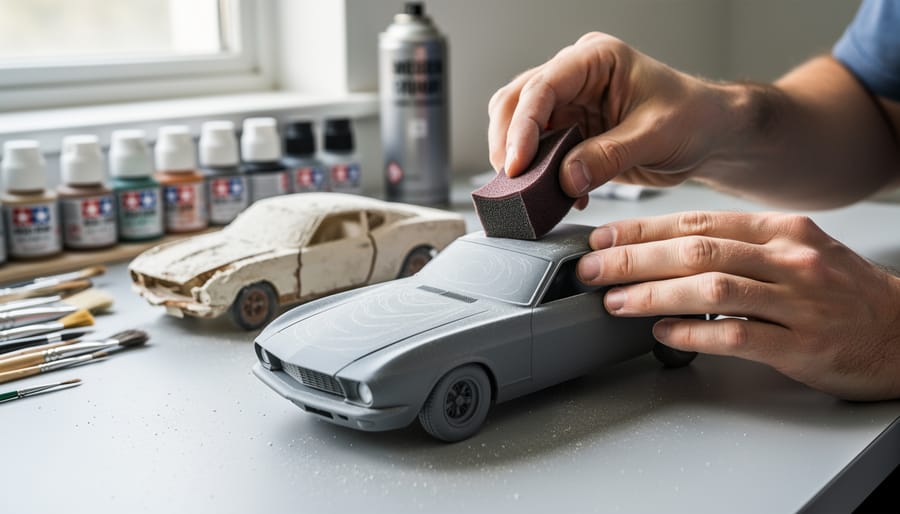
Surface preparation might sound mundane compared to breakthroughs like modified mosquitos or autonomous robotics, but the 2026 Vancouver District fair proved that meticulous material science can be just as compelling. One student tested which surface treatments, sanding grits, alcohol wipes, commercial primers, yielded the smoothest, most durable paint finish on injection-molded plastic kits. The experimental design was elegant: identical plastic coupons divided into treatment groups, each receiving a different preparation sequence before applying the same acrylic topcoat. Variables included primer brand, grit progression (400, 800, 1200), and chemical cleaners. After curing, the student measured adhesion with standardized tape tests and photographed the surfaces under magnification to score smoothness and uniformity.
This project bridges hobbyist passion and industrial relevance. Model builders have debated primer necessity for decades, yet few test it systematically. Meanwhile, automotive and aerospace manufacturers face identical questions when bonding coatings to polymer composites. The student’s findings, that fine wet-sanding followed by a dedicated plastic primer outperformed quick wipes or bare application, offered actionable guidance grounded in controlled observation. It’s a reminder that rigorous method transforms even routine tasks into genuine inquiry, revealing the hidden physics of adhesion, surface energy, and molecular bonding that govern everything from tabletop miniatures to aircraft fuselages.
4. Environmental Monitoring and Water Quality
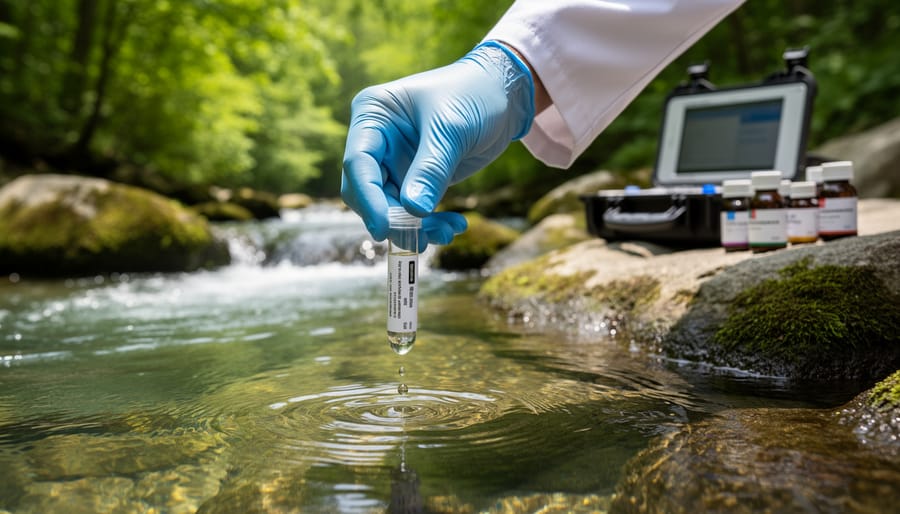
Testing the water you drink or swim in transforms abstract environmental concerns into tangible data, and makes for a science fair project with immediate relevance to community health. Water quality investigations allow students to act as field scientists, collecting samples from local rivers, lakes, tap sources, or storm drains, then analyzing them for contaminants that range from chemical pollutants to microplastics suspended in the current.
A strong project might compare pH levels, turbidity, or dissolved oxygen across multiple sites, mapping how land use, agricultural runoff, industrial discharge, residential areas, correlates with water chemistry. Testing for nitrates, phosphates, or heavy metals requires basic chemistry kits and careful documentation of sampling conditions: time of day, recent rainfall, proximity to pollution sources. For students drawn to emerging issues, screening for microplastic particles involves filtration techniques and microscopic counts, revealing the invisible legacy of plastic waste in seemingly pristine waterways.
The storytelling power lies in connecting lab results to real consequences. Elevated nitrate readings aren’t just numbers; they signal potential algal blooms that suffocate aquatic life. Low pH readings hint at acid rain or industrial impacts. By framing findings as a health report card for local ecosystems, students bridge the gap between scientific measurement and environmental stewardship, offering narratives that resonate beyond the science fair table.
5. Renewable Energy Models and Efficiency
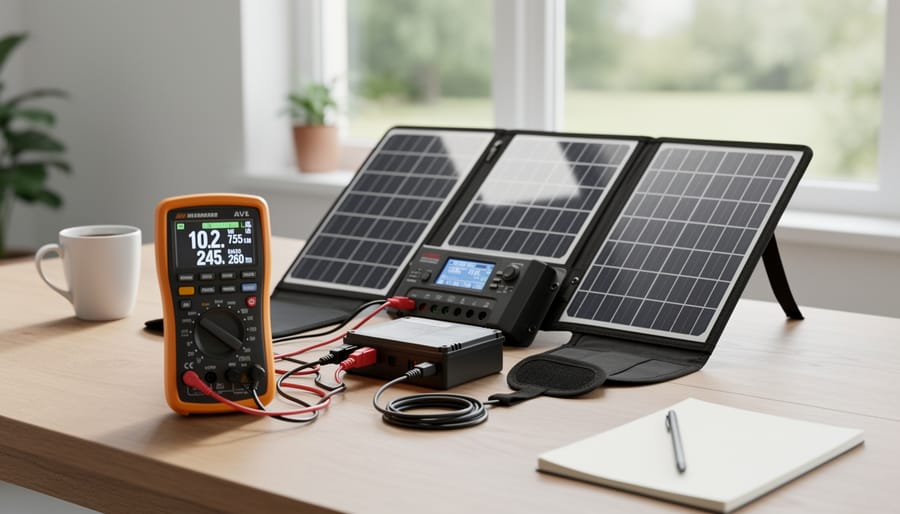
Renewable energy projects offer a hands-on way to explore sustainability while testing real physics principles. A student might build a miniature solar panel array and measure voltage output at different angles to the light source, or construct a wind turbine from household materials and graph power generation against blade pitch. These experiments reveal how energy conversion works in practice, not just in theory.
The beauty of such projects lies in their variable design. You can compare photovoltaic efficiency under simulated weather conditions, test whether vertical-axis turbines outperform horizontal ones in low-wind scenarios, or build a tiny hydroelectric generator and measure how water flow rate affects kilowatt output. Each setup becomes a miniature laboratory where you control one factor, measure the results, and draw conclusions about efficiency trade-offs.
The storytelling angle here is compelling: your project mirrors the same engineering challenges facing grid-scale renewable installations worldwide. Just as researchers extract insights from DNA from bones to reconstruct ancient human history, your data points reconstruct the narrative of how clean energy systems adapt to their environment. Frame your findings around real-world implications, what your turbine’s performance under gusty conditions suggests about wind farm placement, or how your solar angle tests inform rooftop panel orientation. This transforms a simple demonstration into an investigation with genuine relevance.
6. Psychology of Decision-Making and Cognitive Bias
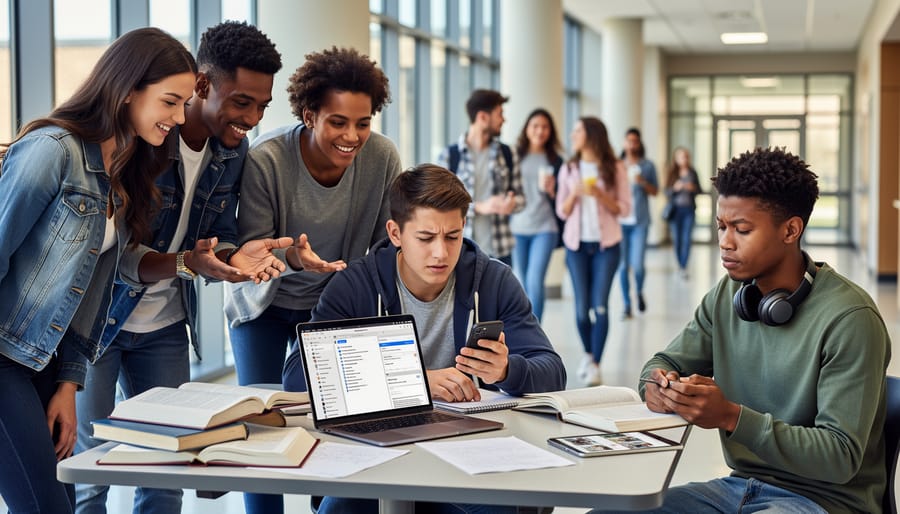
Decision-making projects offer a window into the mind’s hidden mechanics, how we choose, what nudges us, and when our judgment stumbles. A strong psychology project here doesn’t just ask what people decide, but why they decide it, testing factors like time constraints, peer pressure, or competing information.
Start with a testable hypothesis. Does scarcity messaging (“only three left!”) push shoppers toward impulse purchases more than abundance framing? Do teenagers change their answers on moral dilemmas when told their friends chose differently? You’ll need to design controlled scenarios, surveys, timed tasks, or simulated choices, where you manipulate one variable and measure the outcome. Keep the sample size realistic; fifty classmates or community members can yield meaningful patterns if the experiment is tight.
Cognitive bias is your creative hook. Frame the project around anchoring (how an initial number skews later estimates), confirmation bias (seeking evidence that supports pre-existing beliefs), or the decoy effect (introducing a third option that makes one choice more attractive). These concepts bridge psychology and behavioral economics, showing how irrational shortcuts shape everything from shopping carts to voting booths.
Document your methodology rigorously: control groups, randomized conditions, clear definitions of what you’re measuring. Then interpret the results with nuance, acknowledge limitations, consider alternative explanations, and connect findings to real-world implications. The best projects reveal not just that bias exists, but how it operates in context, turning abstract theory into tangible human behavior.
7. Antimicrobial Properties of Natural Substances
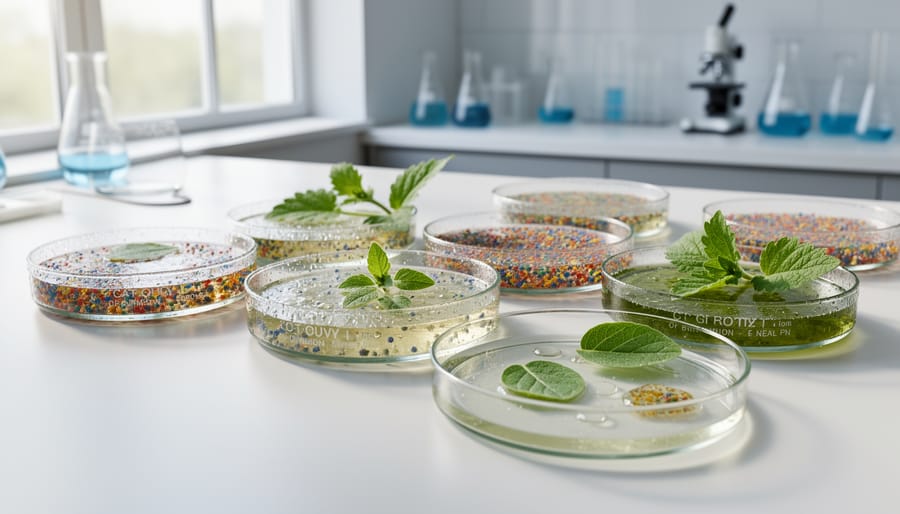
Testing natural substances for antimicrobial activity offers a compelling intersection of traditional wisdom and laboratory precision. This project category lets students culture bacteria on agar plates, apply plant extracts or honey to paper discs, and measure zones of inhibition, clear rings where microbial growth stops. Common candidates include garlic extract, tea tree oil, oregano oil, and raw honey, each with documented antimicrobial compounds. The experimental design demands careful controls: untreated plates to confirm bacterial viability, sterile water or carrier oils as negative controls, and a commercial antibiotic disc as a positive benchmark.
The historical context deepens the narrative. For centuries, cultures worldwide used honey for wound treatment, thyme for preservation, and willow bark for infection, long before germ theory emerged. Modern microbiology now isolates the active agents, allicin in garlic, hydrogen peroxide in honey, and quantifies their potency. A strong project doesn’t just ask “Does it work?” but explores concentration thresholds, duration of exposure, or comparative effectiveness across bacterial species. Students might test whether dilution reduces potency or whether certain oils inhibit Gram-positive bacteria more effectively than Gram-negative strains. This blend of culturing technique, variable manipulation, and storytelling about ancient remedies meeting modern validation makes for a project that’s both methodologically sound and imaginatively rich.
8. Climate Data Analysis and Local Weather Patterns
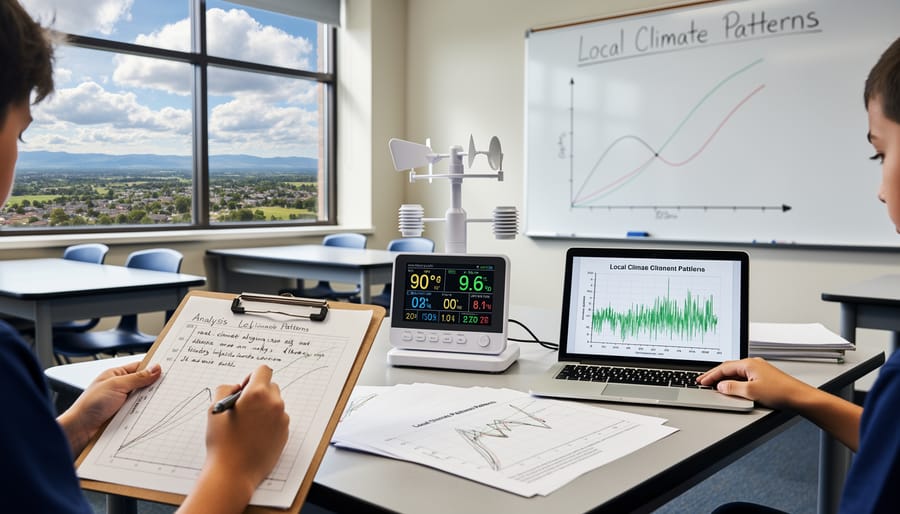
Climate data might seem abstract, but framing it through a local lens transforms statistics into a story your neighbors can see unfolding. A project analyzing historical temperature records, precipitation patterns, or frost dates for your region turns global trends into something tangible, perhaps earlier springs disrupting local agriculture, or shifting rainfall affecting a nearby watershed. Start by pulling publicly available datasets from government weather stations or climate archives; many national meteorological services offer decades of readings in spreadsheet-friendly formats. Define a clear question: Has the average first frost date shifted over thirty years? Do heat waves occur more frequently now than in the 1990s?
Your analysis becomes compelling when you pair statistical methods with visualization. Plot temperature anomalies on a line graph to reveal warming trends, or create a heat map showing the changing distribution of extreme weather days across months. Simple linear regression can quantify rate of change, while moving averages smooth out year-to-year noise to expose longer arcs. The creative angle lies in connecting those curves to real consequences, earlier ice-out dates on a local lake, longer pollen seasons, or changing energy demand for heating and cooling. You’re not just crunching numbers; you’re documenting a region’s climate biography, showing how abstract “climate change” writes itself into specific places and lives.
9. Robotics and Automated Systems for Everyday Tasks
Robotics projects transform invisible algorithms into tangible machines that navigate the messiness of real life. A plant-watering system must account for soil moisture variability, sensor drift, and the unpredictability of a household’s schedule. A recycling sorter faces crumpled cans, half-empty bottles, and the optical challenge of distinguishing green glass from clear. These aren’t hypothetical problems, they’re the constraints that make engineering meaningful.
Start with a single, solvable task. A light-dependent resistor and a microcontroller can trigger watering when soil dries out; adding a moisture sensor prevents overwatering. A conveyor belt with color or weight sensors can route items into bins, but you’ll quickly discover that machine vision struggles with dirty surfaces and that mechanical arms jam on unexpected shapes. Document these failures. They’re the narrative arc of the project, the moment where your prototype meets reality and adapts.
Coding becomes storytelling when you explain not just what the code does, but why. An if-then statement that pauses watering during rain isn’t just logic, it’s anticipation, a machine making decisions based on context. Testing in real environments, kitchens, classrooms, gardens, reveals edge cases no simulation predicts. The best robotics projects don’t showcase perfection; they map the terrain between intention and execution, showing how constraints shape innovation.
10. Sound and Noise Pollution in Urban Environments
Urban soundscapes offer a rich field for exploration, where physics meets public health and ecology. A project measuring noise pollution allows you to document the invisible: the constant hum of traffic, the clatter of construction, the ambient roar that city dwellers tune out but that shapes stress levels, sleep quality, and even wildlife behavior. Start with a simple decibel meter app or a dedicated sound level meter to record measurements at rush hour intersections, quiet parks, school hallways during transitions, and residential streets at different times of day. The goal isn’t just to collect numbers but to find patterns, does proximity to highways correlate with reported anxiety in nearby neighborhoods? Do birds change their song frequency in noisier zones, or avoid certain areas altogether?
The creative angle here lies in framing sound as an environmental contaminant as tangible as smog, yet one we rarely visualize or regulate with the same urgency. Your data can tell a story about how we’ve designed cities around machines rather than human well-being, and your project might propose modest interventions, sound barriers, green corridors, quiet hours, that shift the acoustic balance. This blend of measurement, correlation, and imaginative problem-solving positions noise pollution as both a scientific inquiry and a call for reimagining urban space.
11. Food Preservation Techniques Across Cultures
A food preservation project turns your kitchen into a time machine and laboratory at once. Students can compare fermentation methods from Korean kimchi to German sauerkraut, or test whether sun-drying retains more vitamin C in fruit than oven dehydration. The experimental design might involve preparing identical batches of vegetables using different techniques, salt-curing, vinegar pickling, honey preservation, then measuring bacterial colony counts on agar plates after one, two, and four weeks. Nutrient analysis adds another layer: does canning destroy more antioxidants than freezing?
This idea satisfies the chemistry requirement through pH testing and Maillard reactions during drying, while the anthropological angle explores why Inuit communities relied on fermentation in Arctic climates and Mediterranean cultures perfected olive brining. You’re not just documenting recipes; you’re investigating the science behind why certain methods worked without refrigeration for millennia. A student might discover that honey’s low water activity inhibits microbial growth more effectively than sugar syrup, or that traditional clay pot fermentation creates different bacterial profiles than glass jars. The narrative writes itself when you frame preservation as humanity’s oldest battle against entropy, blending microbiology with the stories of how grandmothers across continents kept their families fed through winter.
12. Optical Illusions and Human Perception
Optical illusions offer a gateway into neuroscience that’s as much art as it is science. Projects in this area can test how context reshapes what we think we see, for instance, presenting identical gray squares against different colored backgrounds to measure perceived brightness shifts, or using motion aftereffects (stare at a rotating spiral, then look away) to investigate neural adaptation. You might build a series of Ames room distortions or impossible object diagrams, then survey participants on which cues, shadow, perspective, familiar size, most powerfully override logic. The experimental design is straightforward: controlled stimuli, standardized viewing conditions, recorded responses. Yet the findings touch profound questions about whether perception is construction or detection, a theme that sits at the boundary of biology and philosophy.
Younger students can explore similar ideas through easy preschool experiments with shadow puppets or color mixing, while kindergarten science experiments might introduce simple pattern recognition tasks. At fair level, though, you’re investigating the mechanics: how retinal signals become conscious experience, why the brain fills gaps or imposes order. Frame your project as a dialogue between what’s physically present and what the mind insists it witnesses, a creative narrative that demonstrates seeing isn’t believing.
Navigating the Science Fair Landscape in 2026
Choosing a science fair idea is one step; understanding where to present it is another. Canada’s science fair landscape operates through a tiered network, beginning with local or regional events and culminating in the Canada-Wide Science Fair, a showcase of the nation’s most promising young researchers. These competitions are more than contests; they’re stages where rigorous inquiry meets the imaginative leaps of science-inspired fiction inviting students to ask questions the world hasn’t fully answered yet.
- The Bison Regional Science Fair welcomes students in Grades 4 to 12 from Winnipeg and surrounding communities, offering younger participants their first taste of formal research presentation.
- Vancouver District’s event, held at Langara College in March 2026, drew 130 scientists from Grades 6 to 12, with projects spanning jaw-muscle wheelchair controls to social media algorithm bias.
- Both fairs affiliate with Youth Science Canada, serving as gateways to the Canada-Wide Science Fair for top performers.
Eligibility criteria, registration deadlines, and specific requirements shift by region and year, so students should confirm details directly with their local organizing committees. Some districts accept projects from Grade 4 onward, while others begin at Grade 6. What remains constant is the opportunity: a chance to transform curiosity into investigation, to test hypotheses against reality, and to join a community that values both empirical rigor and the bold, speculative thinking that drives discovery forward.
Common Questions About Science Fair Ideas
Choosing the right science fair project starts with honest curiosity, not what sounds impressive. The strongest topics emerge when students identify a question they genuinely want to answer, whether it’s testing how different surfaces affect paint adhesion or exploring bias in digital platforms. Originality doesn’t mean inventing something entirely new; it means bringing your own angle, methodology, or local context to an investigation. Ask yourself what bothers you, fascinates you, or seems slightly off about the world around you, then design an experiment to probe that question.
What’s the difference between demonstration and investigation?
A demonstration shows a known principle (like a baking soda volcano), while an investigation tests a hypothesis through controlled experiments with variables you manipulate and measure. Science fairs reward investigations that generate new data rather than simply illustrating textbook concepts.
Can younger students participate in science fairs?
Yes, though eligibility varies by region. The Bison Regional Science Fair accepts students from Grades 4 to 12, while the Vancouver District event starts at Grade 6. Check with your local fair for specific age requirements.
How much does participation cost?
Registration fees differ widely between fairs and aren’t consistently published. Contact your regional organizer directly for current pricing and whether fee assistance is available.
What makes a project competitive?
Competitive projects combine rigorous experimental design, clear data collection, and thoughtful analysis with real-world relevance. Judges look for students who understand their methodology, acknowledge limitations, and can articulate why their question matters beyond the fair itself.
The pathway from regional participation to national competition adds another layer of motivation. Events like the Bison Regional Science Fair connect to Youth Science Canada and the Canada-Wide Science Fair, meaning a strong local project can open doors to broader recognition. Yet the most memorable projects aren’t necessarily the ones chasing medals, they’re the ones where the student’s enthusiasm for discovery shows through every graph, every trial, every revised hypothesis. If you can explain why your question matters to you personally and how your findings shift your understanding, you’ve already succeeded in the deeper purpose of science inquiry.
Final Thoughts: Where Fact Meets Imagination
The best science fair projects don’t choose between rigorous data and compelling narrative, they live in the overlap. When you measure decibel levels in a bustling market or test antimicrobial compounds from your grandmother’s herbal remedies, you’re gathering quantifiable evidence and weaving a story about the world we inhabit. This dual act of inquiry and imagination is where science becomes more than procedure. It becomes a lens for viewing old questions in new light, for questioning assumptions that others accept, and for discovering connections that textbooks haven’t yet mapped.
Science fairs reward students who embrace uncertainty with confidence, who design experiments knowing some hypotheses will fail, and who present findings with the honesty of true researchers. Whether you’re tracking climate patterns across decades or building a robot from salvaged parts, you’re practicing the art of structured curiosity. Choose a project that sits at the edge of what you know and what you wonder. That’s where discovery happens, and where your work contributes something original to the conversation between human ingenuity and the natural world.